How to Play Mahjong Solitaire: Free Tiles and Pairs

Mahjong solitaire is a one-player tile puzzle. You remove matching pairs from a stacked layout until the board is empty. The catch is that you can only take a tile that is free. This guide explains what free means, walks through a first board and compares six games, including variants that change the linking rule.
All six sit under mahjong games, and the puzzle games page has related titles.
What makes a tile free?
A tile is free when nothing lies on top of it and its left or right side is open. Tiles buried under others, or boxed in on both sides, have to wait. You can only pick free tiles, and you remove two identical ones at a time.
Mahjong Unlimited shows the rule well. A tile counts as free when its left or right side is open and nothing covers it. Each tile appears four times, and the board ends when none remain. The game has four difficulty modes, with or without a clock, and a hint button for tricky spots. It has optional in-game purchases, and you can play it free with no download.
How does a first board go?
- Scan the free tiles and find a matching pair. With four copies of each tile, you often have a choice.
- Check which tiles a pair uncovers before you remove it. Prefer the pair that opens up the tiles covering the most others.
- Keep one copy in reserve when two pairs of the same tile are available and removing the wrong one could trap the other.
- Repeat until the layout is clear. If no pair is free, use a hint.
Mahjong Unlimited's own tip matches the second point: open the tiles that cover many others to free up more options. Look at all four copies of a tile before you pick which pair to take.
How do the variants change the rule?
Many tile games keep the matching but change how two tiles connect.
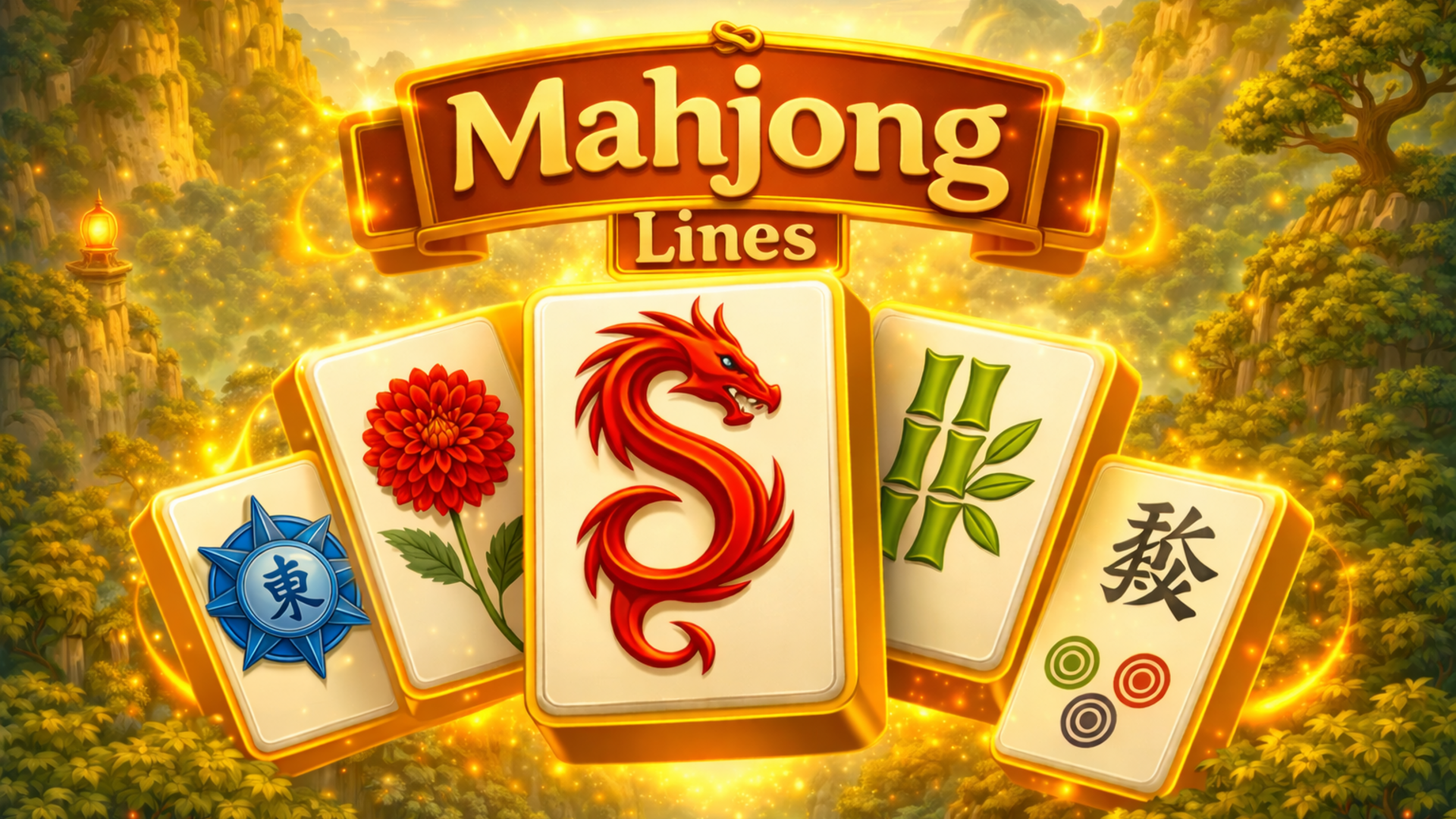
- Connect lines: Mahjong Lines puts every tile on one level, so nothing is stacked. A pair works only when the path between the two tiles has at most three straight lines, two turns at most, and crosses only empty cells. It has hints and a shuffle for stuck boards. The layout suits portrait screens.
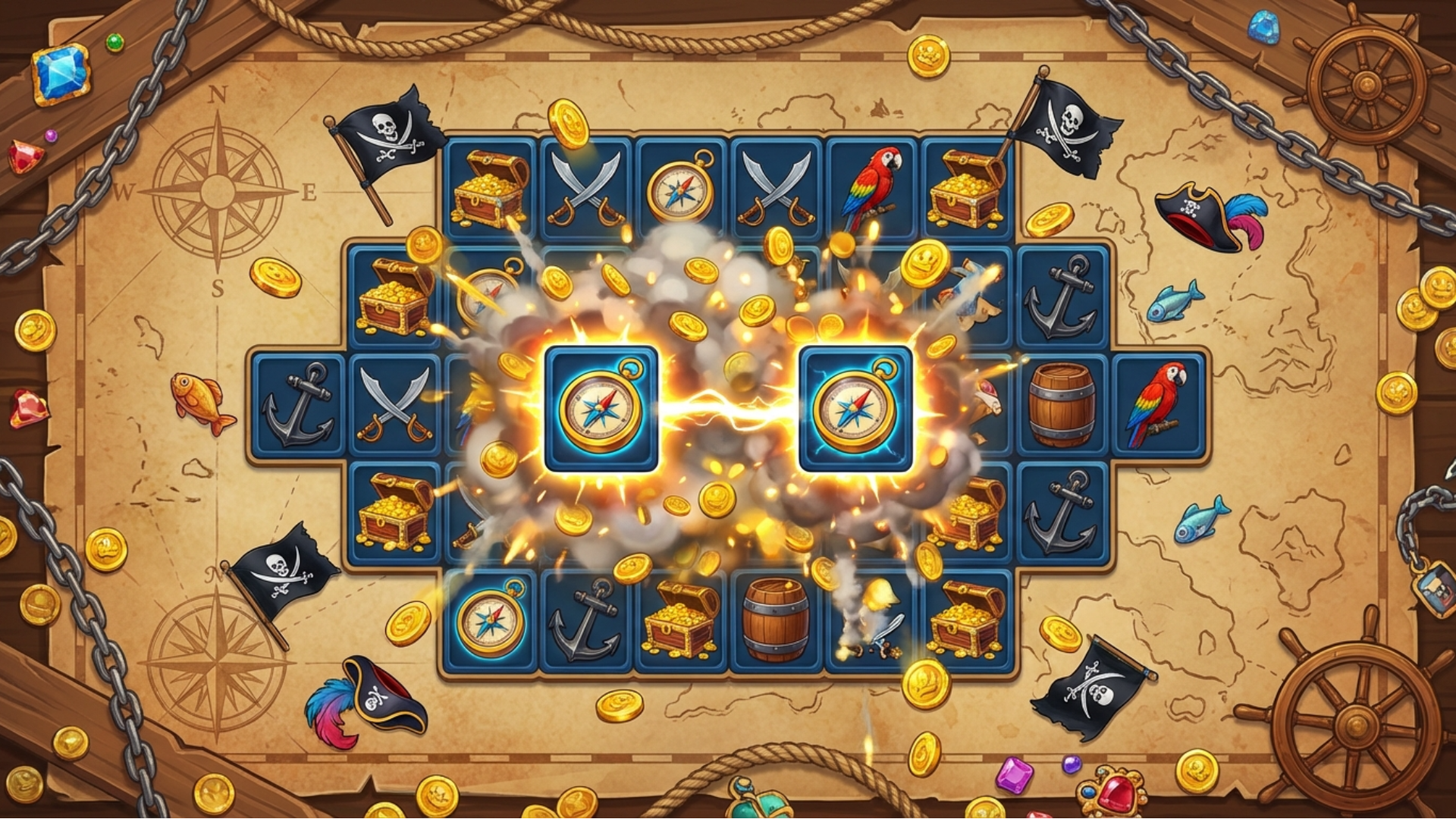
- Same tile, three lines: Pirates Tiles Challenge uses the same three-line link with flags, chests, swords and anchors. You can earn up to three stars on each level, and the lightbulb button gives a hint.
- Row or column: Mahjong Puzzle: Tile Match links matching tiles on a shared row or column, with empty space allowed between them. Study the whole layout before the first match.
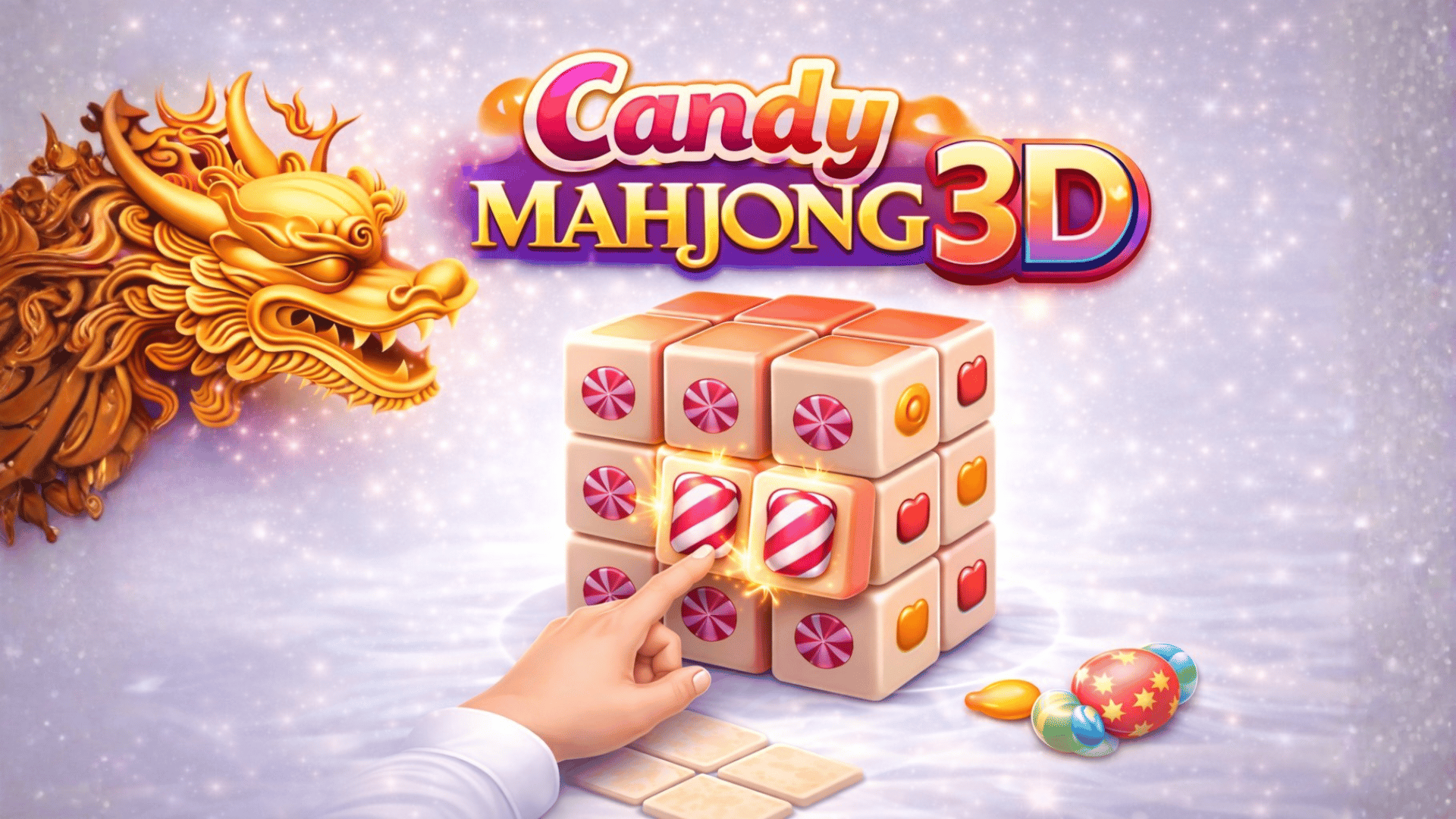
- 3D board: Candy Mahjong 3D stacks candy tiles in 3D. You rotate the scene 360 degrees to find the hidden twin, and you zoom in or out to plan.
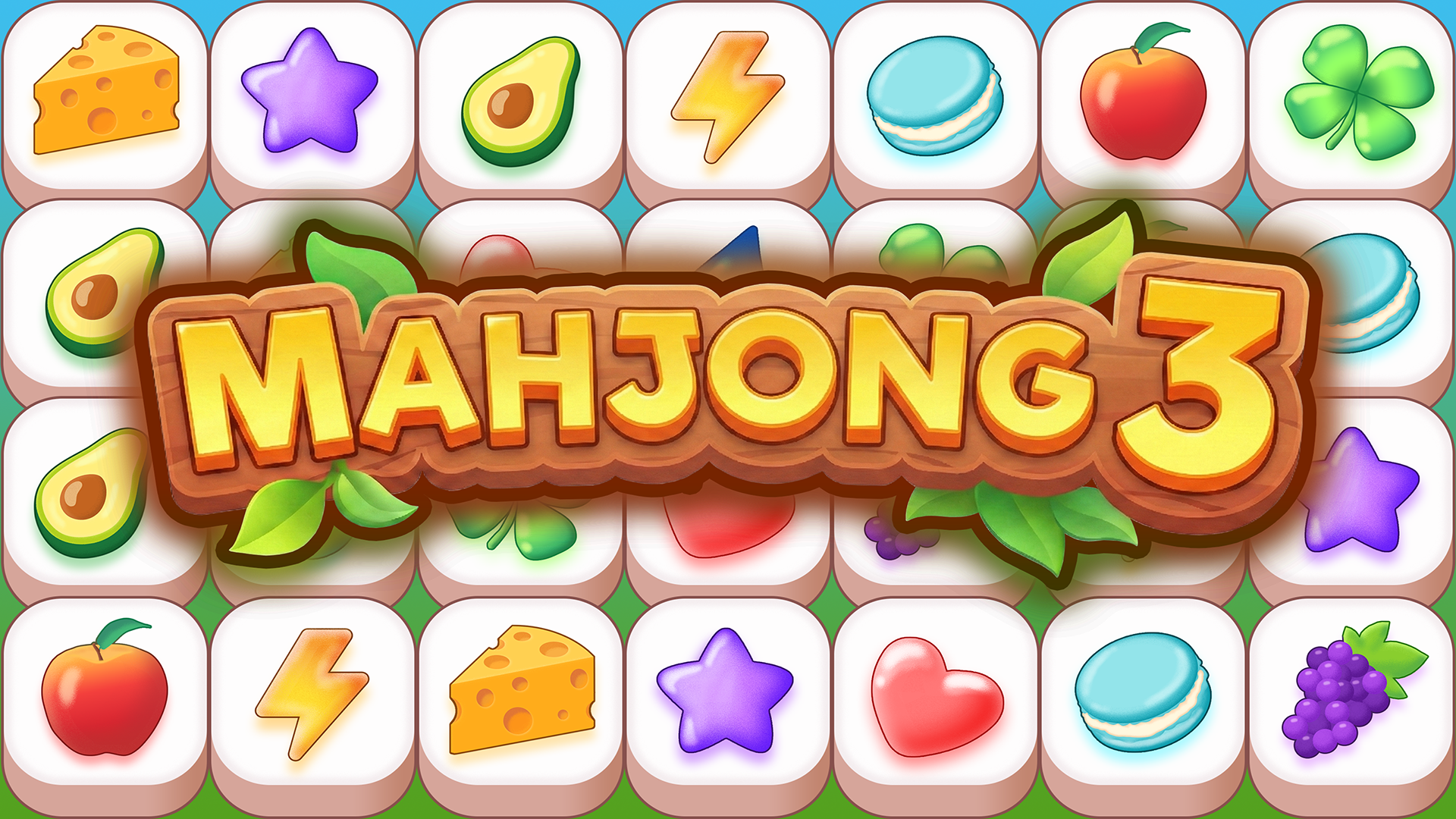
- Match-3 mix: Mahjong 3 blends match-3 and mahjong in a fairytale setting. Boosters help on hard levels, and you earn coins and stars.
What do you do when you are stuck?
First, count what is free. If no pair is open, no move exists and the board needs help. Hints show a legal pair. A shuffle, where a game offers one, rearranges the tiles. In the 3D game, rotate the board before every move, since a hidden tile may complete a pair.
In the line games, work the edges of the board first. A cleared edge opens new routes, since paths pass only through empty cells. Try a pair with a straight line between them before you plan one with turns.
Where should you start?
Start with Mahjong Unlimited, because it uses the classic stacked rule and lets you choose a difficulty. Once the free-tile idea feels natural, try Mahjong Lines to see how a different linking rule changes your planning. If you like a calmer look, Candy Mahjong 3D rewards slow, careful turning of the board.
Games in this guide


Related categories
More guides
See all- Triple Tile Match Games: How They Differ From Mahjong
Sets of three, a limited tray and layered piles: how triple-match tile games work and where they part ways with mahjong.
- What Is an Obby? Obstacle Course Games Explained
Obby means obstacle course: what you do, the four styles you will meet, and what to check before a first run.
- Steal-an-Egg Games: How the Sneak and Grab Loop Works
How the sneak, grab and run loop works in steal-an-egg games, and what separates six of them.